510(k) Class II submission planned for FDA Surgery Division as a surgical nerve visualization aid.
From laboratory validation to multi-site human feasibility studies.
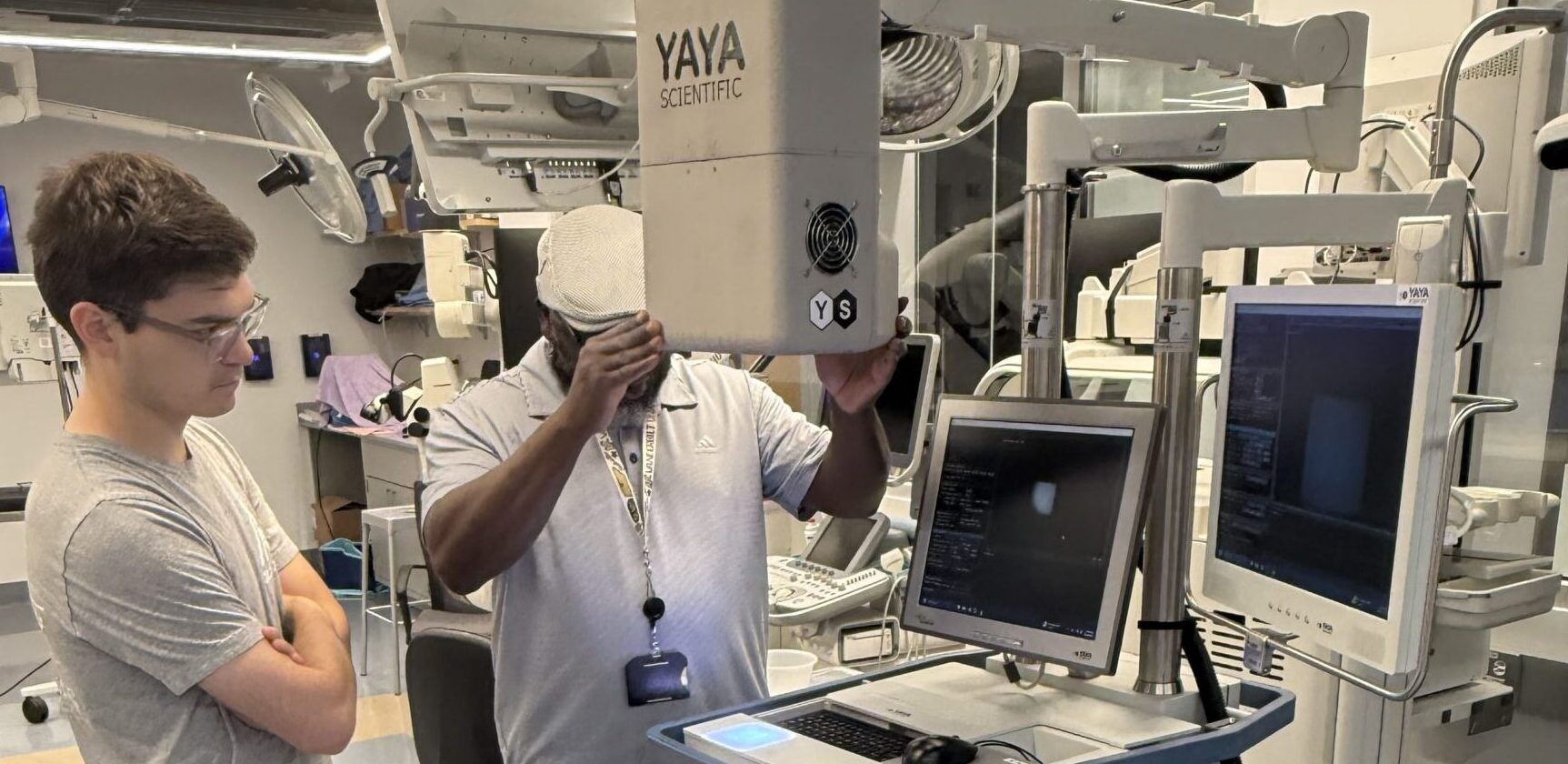
Alina™ Beta design integrating surgeon feedback into manufacturable clinical units.
Clinical prototype and clinical study launch to support FDA clearance.
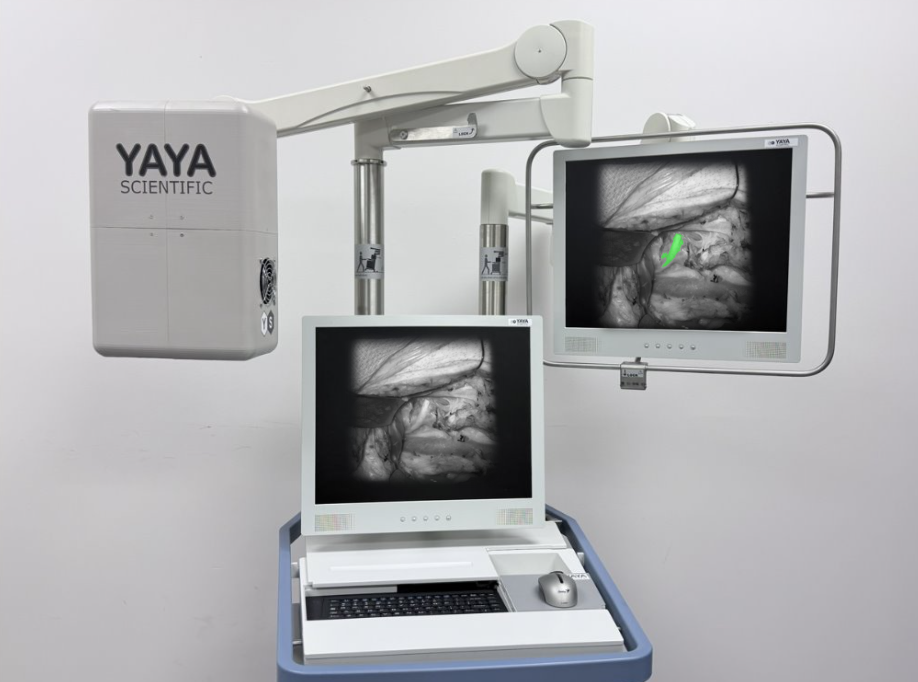
Live bench testing of the Alina™ system demonstrating the milestone of live-view thresholding of sciatic nerve tissue placed on spleen. A separate collagen structure is also visible in the field, helping show that the thresholding is selectively identifying nerve tissue rather than surrounding non-nerve structures.
This preview reflects YaYa Scientific’s continued progress in developing imaging tools designed to enhance tissue visualization and support future surgical applications.
Chronic postoperative pain and nerve injury remain significant challenges across many surgical specialties in the United States. Even when overall risk is low, the consequences of nerve damage can be profound—affecting sensation, motor function, recovery time, quality of life, and long-term healthcare costs.
YaYa Scientific focuses on generating data that supports safer, more confident surgery. In collaboration with leading academic medical centers, we are evaluating whether real-time, intraoperative nerve visualization can reduce preventable injury and improve patient outcomes—without disrupting existing surgical workflows.
We study how the technology fits into standard operating room workflows—assessing usability and surgeon adoption in live cases without adding procedural complexity.
Studies examine whether real-time visualization enhances intraoperative awareness and helps surgeons identify, preserve, or repair nerves more confidently.
Our multi-site clinical studies measure safety, performance, and patient-reported outcomes to quantify the benefit of nerve visualization during surgery.
A 510(k) is an FDA premarket submission commonly used for Class II medical devices. It demonstrates that a new device is substantially equivalent to a legally marketed predicate device and meets the applicable requirements for safety and effectiveness. If FDA determines that the device is substantially equivalent, it grants 510(k) clearance, allowing the device to be commercially marketed in the United States.
Timelines vary with device complexity, required evidence, and FDA interactions.
As YaYa Scientific progresses from Alina™ Beta verification and GLP safety testing to surgeon studies. This data — combined with risk analysis, predicate comparison, and manufacturing controls — will form the foundation of our 510(k) - Class II FDA submission.
Interested in learning more about Alina™ or collaborating with our research and clinical teams? Reach out — we’d love to hear from you.
Contact Our Team