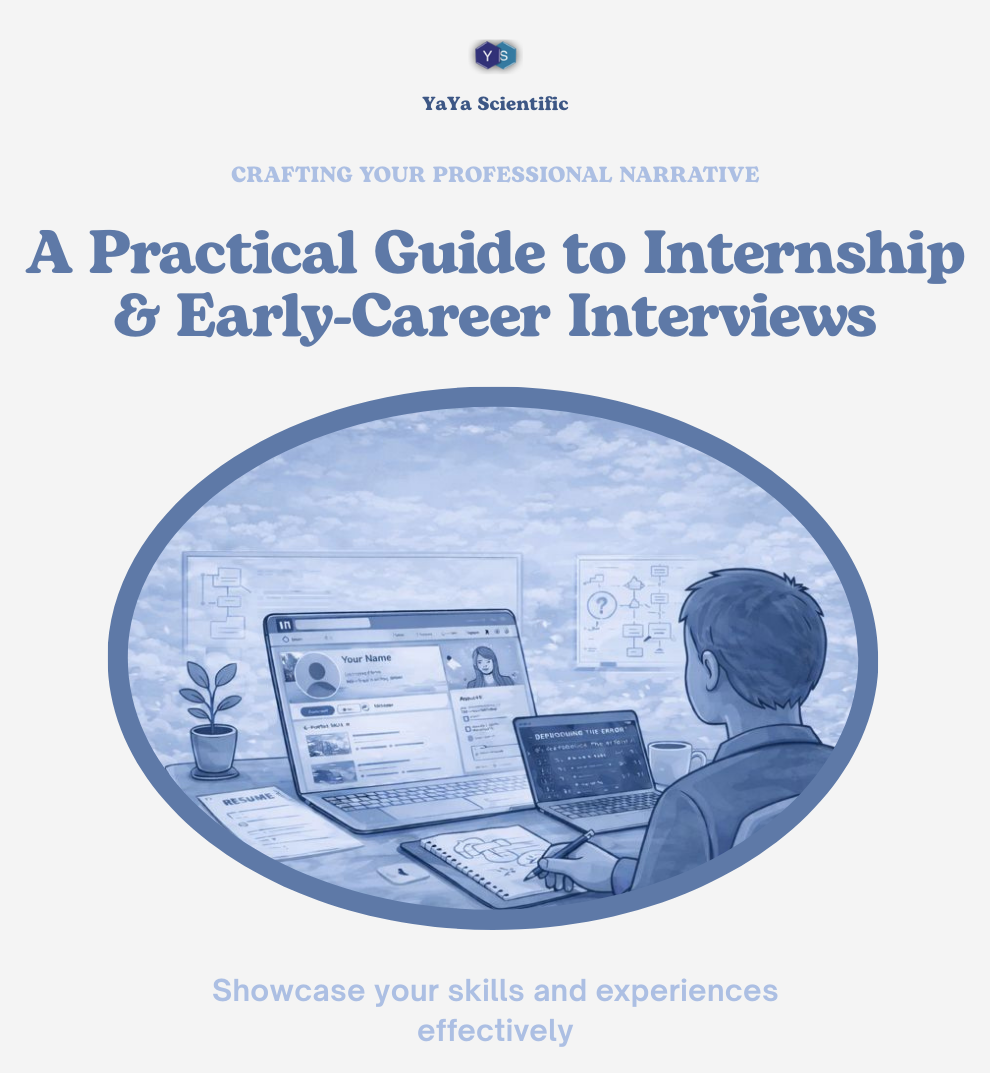
A Practical Guide to Internship
& Early-Career Interviews
Preparing for internships and early-career roles can feel overwhelming. Between applications, resumes, portfolios, and interviews, it’s not always clear where to focus—or how all of these pieces connect. Many students feel pressure to get everything “right” without ever being shown how the process works as a whole.
This guide brings together practical tips we’ve shared throughout our LinkedIn interview preparation series, along with additional context and examples, to help students and early-career professionals approach the process with clarity and confidence.
If you’re applying to opportunities like the LaunchTN Summer Internship Program, these strategies are designed to help you present your skills, interests, and growth in a way that feels authentic and intentional.
Establishing Your Professional Presence
Before a recruiter or interviewer ever meets you, they often form an initial impression based on what they can find online. That makes your professional presence—especially LinkedIn—an important starting point.
Think of LinkedIn as an Instagram for your career. It’s a place to share what you’re learning, what you’re interested in, and how you’re growing over time. Because this profile may stay with you throughout your career, it’s worth keeping it professional, accurate, and reflective of your interests.
A strong LinkedIn profile doesn’t need to sound corporate or polished beyond recognition. What matters most is clarity. A clear photo, a headline that reflects your interests, and an “About” section written in your own voice helps people understand who you are and where you’re headed. Coursework, projects, research, internships, and leadership experiences all belong here—especially early in your career.
Equally important is how you engage on the platform. Following companies you’re interested in, interacting with posts in your field, and connecting with people you meet through classes, internships, or events shows curiosity and initiative. Over time, these small actions help paint a fuller picture of your interests beyond a resume.
If you’d like to see what this can look like in practice, here’s an example of a student-friendly LinkedIn profile from one of our team members:
Example LinkedIn Profile
Telling Your Story with an E-Portfolio
While LinkedIn introduces you, an e-portfolio allows you to tell a deeper story. Where resumes summarize what you’ve done, portfolios explain how you think.
An effective e-portfolio doesn’t need to be complex or expensive. Free tools like Google Sites make it possible to create a clean, professional space where you can walk someone through your work.
The most helpful portfolios focus on a small number of meaningful projects rather than everything you’ve ever done. Each project should clearly explain the problem you were working on, your role, the decisions you made, and what you learned along the way. Including reflections—what you’d improve or approach differently next time—often tells interviewers more than a polished final result.
The goal isn’t to impress with volume—it’s to help someone understand your thinking quickly. A well-organized portfolio should feel like a guided conversation, not a showcase of everything you’ve ever done.
⚠️ Important reminder: Always remove proprietary or confidential information and ensure you have permission to share any work publicly.
Using Your Resume Strategically
Many students feel pressure to make their resume do everything at once: summarize their background, showcase all their work, and tell a complete story. This often leads to clutter, frustration, and the feeling that nothing is ever “good enough” to submit.
A more sustainable approach is to treat your resume as a strategic tool. Maintaining two versions of your resume—a short application resume and a longer portfolio resume—can make the entire process more manageable and intentional.
Your application resume is designed to make a strong first impression. It should be one page, tailored to the specific role, and focused only on your most relevant skills and experiences. Its job is not to show everything you’ve done—it’s to clearly communicate fit and earn an interview.
Your portfolio (long-form) resume serves a different purpose. Think of it as a “master resume”—a living document you update over time as you complete new projects, coursework, internships, and experiences.
Because this version isn’t constrained to one page, it allows you to capture your full body of work without the pressure of editing everything down at once. This makes it much easier to craft role-specific application resumes later, since you’re no longer starting from scratch for each opportunity. Instead, you’re selecting and refining the most relevant pieces from a well-organized foundation.
This approach also gives you the space—and patience—to choose your strongest work for each application. When everything you’ve done is already documented in one place, you’re less likely to feel overwhelmed or rushed, and more able to be intentional about what you present as your first impression.
Together, these two resumes work as a system. One opens the door, while the other supports deeper exploration—helping you apply with clarity, confidence, and far less frustration.
Preparing for Introductory Interviews
Being invited to interview means your qualifications got you noticed. Now the conversation is about who you are, how you communicate, how you approach learning, and how you might fit into a team.
Introductory interviews are not about having perfect answers. They’re an opportunity for interviewers to understand your interests, communication style, and what it might be like to work with you day to day. Team dynamics matter, and employers are often listening for how you collaborate, respond to feedback, and engage with others.
Thoughtful preparation can help these conversations feel more natural and less stressful. Reflecting on why you’re interested in the role, what excites you about the work, and which experiences you feel comfortable discussing can go a long way. Preparing a few questions in advance is also encouraged—thoughtful questions show curiosity, engagement, and genuine interest in the team and the work.
During the interview, it’s okay to pause before answering or to think out loud. If your interviewer hasn’t already reviewed your portfolio, this is a good moment to offer to share it and walk them through a project you’re proud of. Being honest about what you know—and what you’re still learning—helps build trust and keeps the conversation genuine.
The strongest introductory interviews feel less like an evaluation and more like a conversation, where both sides are learning whether the role and the team are a good fit.
Approaching Technical Interviews with Confidence
Technical interviews often cause the most anxiety, especially for students and early-career professionals. It’s important to remember that these interviews are rarely about knowing everything. More often, they’re designed to understand how you think, how you learn, and how you respond when faced with uncertainty.
Many technical skills can be taught on the job. What’s much harder to teach—and what interviewers pay close attention to—is willingness and eagerness to learn, honesty about what you do and don’t know, and integrity in how you approach problems. These qualities matter just as much as arriving at the correct answer.
During a technical interview, talking through your thinking out loud helps interviewers follow your reasoning. Asking clarifying questions shows curiosity and care. If you’re unsure you fully understand the question, repeating it back in your own words can help ensure shared understanding before you move forward.
If you don’t know an answer, being honest and explaining how you would approach finding a solution often leaves a stronger impression than guessing. Walking through how you would break down the problem, what resources you might use, or what steps you would take to learn more demonstrates problem-solving skills and a genuine desire to grow.
Mistakes are not failures in technical interviews. Acknowledging them and explaining how you would adjust shows adaptability, self-awareness, and professionalism. These moments often reveal far more about your potential than the perfect solution ever could.
Where to Go from Here
The guidance shared here is meant to help you get started—not to cover everything. There are many excellent resources available on building LinkedIn profiles, creating e-portfolios, writing resumes, and preparing for interviews, and we encourage you to continue exploring what works best for you and your goals.
Your professional materials should evolve as you do. Revisiting and refining your LinkedIn profile, portfolio, and resume over time—rather than trying to perfect everything at once—can make a meaningful difference. Growth happens incrementally, and small, intentional updates often have the biggest impact.
Preparing for interviews isn’t about checking boxes. It’s about understanding your story, reflecting on your growth, and communicating with intention and authenticity.
If you’re planning to apply to the LaunchTN Summer Internship Program, we encourage you to put these ideas into practice and submit your application. We hope these tips help you move forward with confidence as you take your next steps.