July 15th, 2026
By Kloie Bautz
A medical device can look very different in the lab than it does in the operating room.
In controlled testing, teams can manage lighting, positioning, timing, setup, and the materials being evaluated. That environment is important because it gives engineers a place to isolate problems, make comparisons, and understand how a system behaves under known conditions.
The operating room adds a different layer of information.
Instead of a fixed setup, the environment is active. Lighting changes. Instruments move through the field. Tissue appearance can vary. Space is limited. Timing matters. The surgical team is focused on the procedure, not the technology. For a new device to be useful in that setting, it has to be designed with those realities in mind.
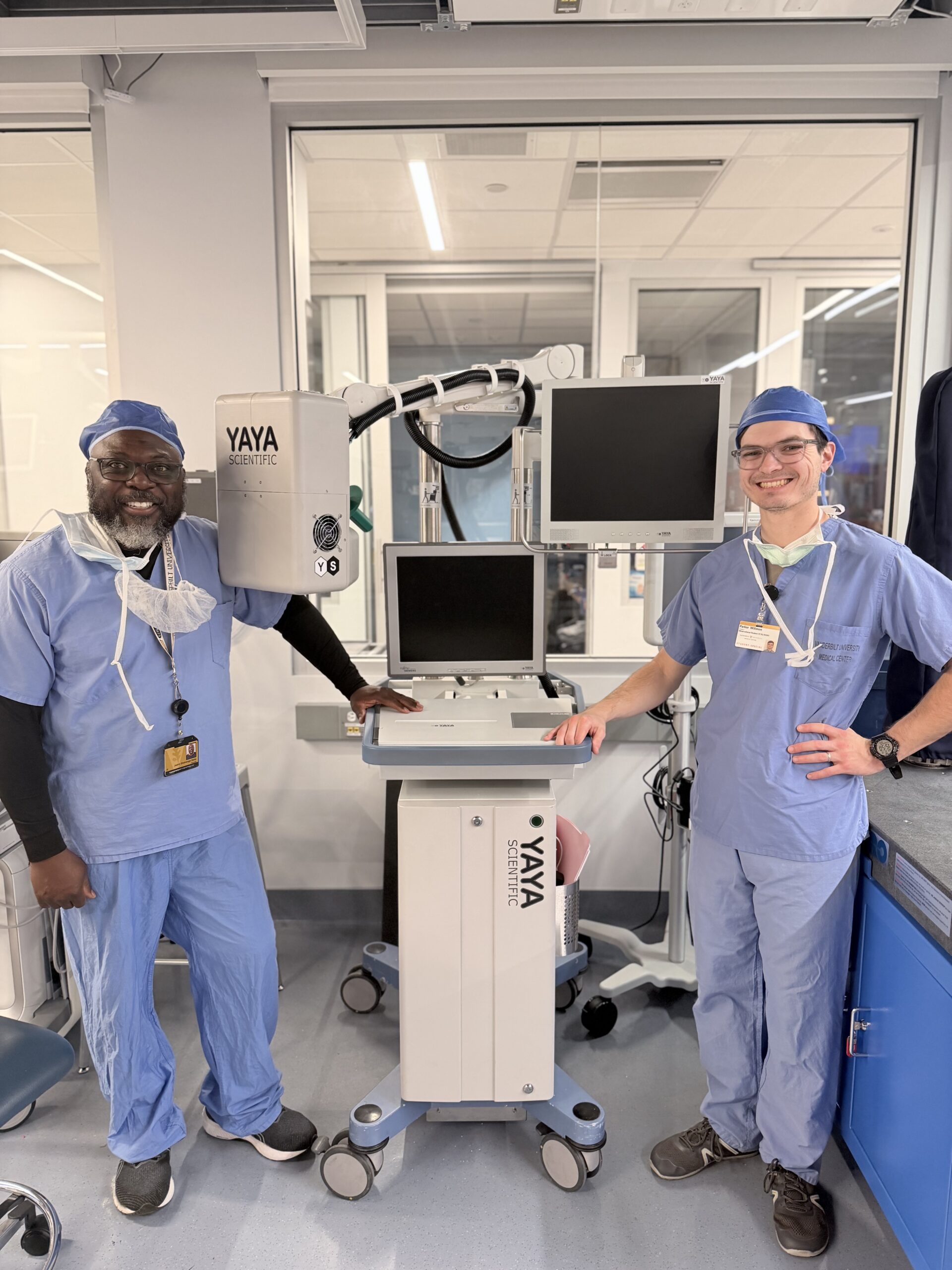
At YaYa Scientific, operating room experience continues to inform how our team refines the Alina™ platform and thinks about real-time surgical visualization.
Laboratory testing is where many development questions begin.
It gives a team the ability to slow things down, repeat a setup, adjust one variable at a time, and evaluate what changed. For a surgical visualization platform, that kind of testing can help answer practical questions about imaging conditions, software behavior, system setup, and visual output.
Controlled testing also gives teams a shared reference point. When results can be repeated and compared, it becomes easier to understand whether an update improved performance, introduced a new issue, or changed how the system behaves.
That foundation matters. Without it, development becomes guesswork.
But laboratory testing is not the same as operating room experience.
In the operating room, the system has to function around the procedure.
That changes the development questions.
Can the technology be positioned in a way that makes sense for the surgical setup? Is the display easy to interpret at the right moment? Does the visualization remain useful when the field changes? How does the system respond when lighting, motion, tissue conditions, or instruments introduce new variables?
These are not just technical questions. They are workflow questions.
For surgical visualization technology, that distinction is important. A device may produce useful information, but the way that information is presented has to fit the environment where it will be used. The operating room helps reveal which details matter most in practice.
Operating room experience does not replace controlled testing. It makes controlled testing better.
When a team observes how a system behaves in a surgical environment, that experience can guide the next round of calibration, refinement, and evaluation. It can show which conditions need to be recreated more carefully in the lab, which settings need further adjustment, and which parts of the workflow deserve closer attention.
For the Alina™ platform, this process is part of continued development. Our team uses what we learn from operating room experience to better understand how real-time visualization behaves in a practical surgical setting.
That learning process is iterative. Each experience helps shape the next technical question.
For a visualization platform, the goal is not only to generate an image.
The goal is to make information easier to understand in context.
In surgery, context matters. The user is not reviewing an isolated image after the fact. The surgical team is working in a live environment where time, attention, and clarity are all important.
That is why development has to account for more than the underlying imaging approach. It also has to consider how information is processed, displayed, positioned, and interpreted during the procedure.
For Alina™, that means continuing to refine the platform around the practical needs of real-time intraoperative visualization.
Medical device development is not a straight line from concept to product. It is a cycle of building, testing, learning, refining, and testing again.
Laboratory work gives teams a foundation. Operating room experience adds perspective. Together, they help turn technical development into something more aligned with the environment where the technology is intended to operate.
At YaYa Scientific, that perspective continues to shape our work on the Alina™ platform.
As we continue developing real-time surgical visualization technology, operating room experience helps keep the work connected to the practical realities of surgery — where clarity, usability, and timing all matter.