 Before the Algorithm: The Science Behind Surgical Innovation
October 12th, 2026
By Kloie Bautz
Artificial intelligence is changing how we work, solve problems, and imagine the future. Tasks that once required hours can now be completed in minutes, and possibilities that once seemed out of reach are becoming increasingly attainable.
In healthcare, these advancements are opening exciting doors for research, diagnostics, and medical technology.
But amid the excitement surrounding what AI can accomplish, there’s another side of innovation that deserves recognition.
Behind every intelligent system is a story that began long before the algorithm.
A story of scientific curiosity, experimentation, engineering challenges, and, most importantly, the people who turned an idea into something real.
When we hear about a new medical technology, we often see the finished product: an innovative device, an impressive demonstration, or software capable of analyzing complex information.
What we rarely see is everything that came before it.
The questions that sparked the original research. The experiments that didn’t produce the expected results. The designs that worked in theory but required countless adjustments in practice.
Developing a medical device requires more than a promising idea. It takes scientists, engineers, clinicians, and researchers working through challenges that rarely have straightforward answers.
A design might perform well in a laboratory but require significant refinement before it can function in a clinical environment. A solution that makes perfect sense from an engineering perspective might need to be reconsidered after conversations with the people who would actually use it.
Sometimes progress means building something new. Other times, it means questioning an approach you’ve already spent months developing.
These experiences aren’t simply obstacles along the way. They’re part of the process that transforms an idea into a functioning technology.
And that foundation is what makes the next generation of intelligent tools possible.
Artificial intelligence is creating remarkable opportunities to improve how technology operates, and at YaYa Scientific, we’re excited about the role it can play in our future.
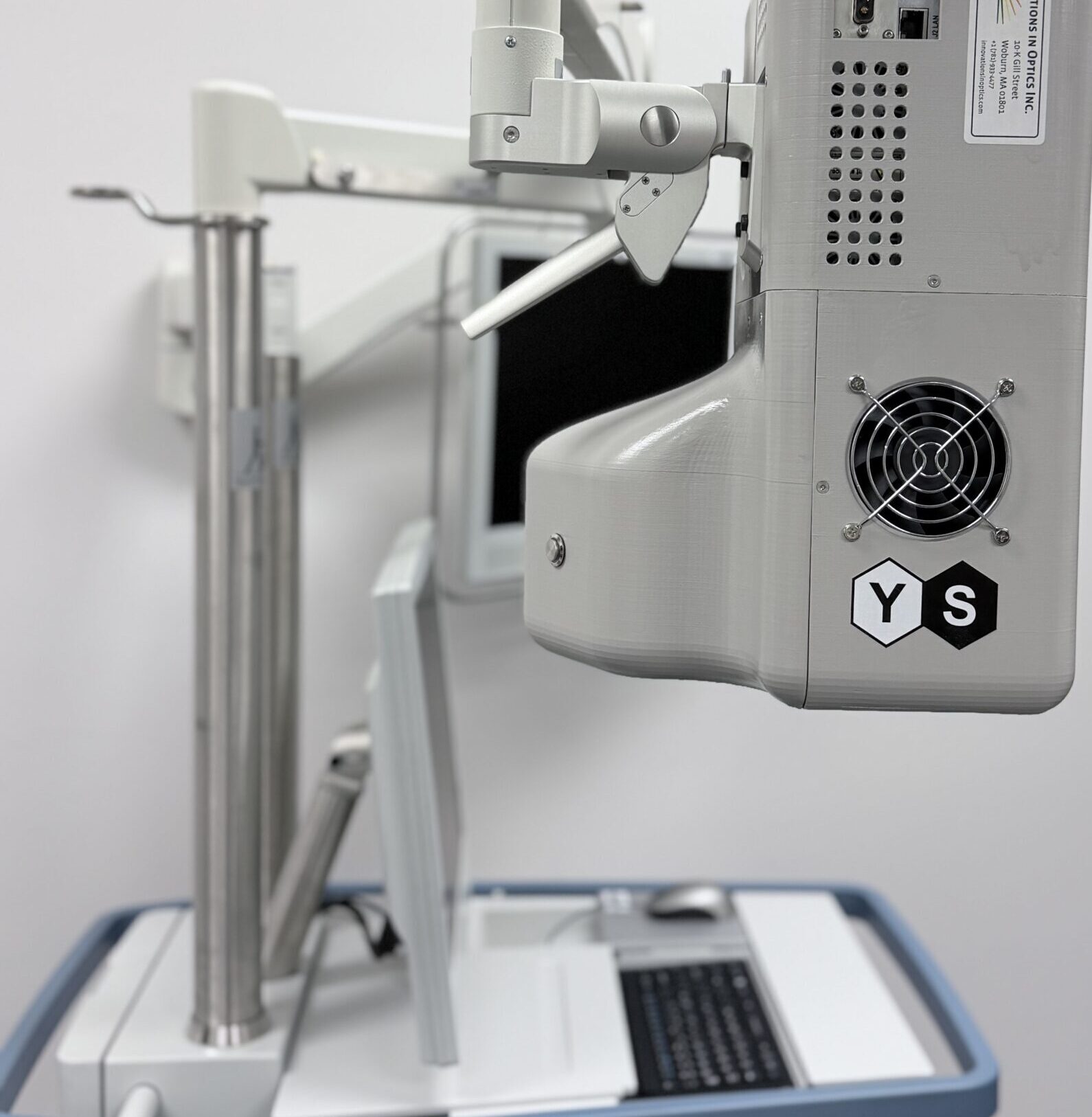
As we continue developing our investigational Alina™ surgical imaging platform, we plan to incorporate AI to improve system efficiency and build upon the foundation established through scientific research and engineering.
For us, these aren’t competing approaches. They’re opportunities to bring different strengths together.
AI has the potential to streamline processes, improve efficiency, and help us make better use of the technologies we develop.
But it’s the research and engineering behind those systems that establish what they are capable of accomplishing in the first place.
That distinction matters.
Technology doesn’t become more valuable simply because it becomes more intelligent or operates more quickly. Its value also depends on the problems it helps solve and how effectively it serves the people using it.
The question isn’t simply how much more efficiently a system can operate. It’s how those improvements can help people accomplish something meaningful.
And in medical technology, answering that question requires careful consideration of what happens when a new tool moves beyond the research environment.
Imagine a new medical technology produces an unexpected result.
Is it a meaningful discovery? A technical limitation? An error that needs to be investigated?
Finding the answer requires more than processing information. It requires understanding the circumstances, questioning the results, and deciding what to investigate next.
In medicine, those distinctions matter.
An impressive demonstration doesn’t necessarily mean a technology is ready for clinical use. New medical devices must undergo careful evaluation to understand their performance, reliability, limitations, and potential risks.
Artificial intelligence can contribute to this process, but it doesn’t eliminate the need for scientific judgment, clinical experience, and thoughtful decision-making.
As technology becomes more sophisticated, understanding what it can and cannot reliably accomplish becomes increasingly important.
The opportunity isn’t simply to accomplish the same work in fewer steps. It’s to expand what’s possible, explore ideas that once seemed impractical, and give skilled professionals better tools to address challenges that remain unsolved.
Because ultimately, progress in healthcare isn’t measured by speed alone. It’s measured by whether the advances we make can meaningfully improve the tools and approaches available to those delivering patient care.
At YaYa Scientific, our work on Alina™ brings together scientific research, physical engineering, software development, and clinical collaboration toward a shared goal: advancing technology designed to help surgeons identify delicate nerve structures during surgery.
We’re excited about the opportunities AI may bring as we continue developing the platform, particularly its potential to improve efficiency and enhance the technology we’ve worked to build.
But what makes that progress possible extends beyond any single tool or discipline.
It’s the scientist who asks a question that hasn’t been answered.
The engineer who approaches a persistent challenge from a different angle.
The clinician whose experience reveals something that might otherwise have been overlooked.
And the collaboration that brings those perspectives together.
In medical technology, all of that work is connected by a shared purpose that extends beyond the device itself to the patients and healthcare professionals it is intended to serve.
As AI continues to advance, we have an opportunity to develop technologies that are not only more intelligent but also more useful, reliable, and responsive to the people who depend on them.
The future of medical innovation will undoubtedly involve increasingly sophisticated technology. We believe it should also continue to reflect the curiosity, creativity, collaboration, and compassion of the people developing it.
Because sometimes, the most important part of a technological breakthrough isn’t the technology itself. It’s the humanity behind it.